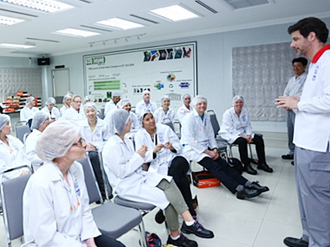
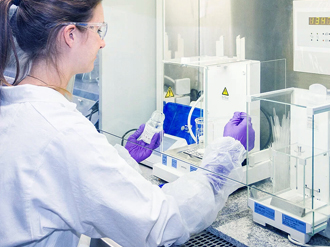
The intermediate level course is designed for those working in any branch of the food industry at supervisory level. This includes ‘traditional’ supervisors and team leaders, but also anyone who needs a broad understanding of food hygiene as part of their work. Those who can benefit from this course work in the following fields among others:
- Quality assurance
- One to one or on the job instruction and training
- Investigation of customer complaints
- Purchasing, especially raw materials
Course Objectives
The intermediate course is ideal for those considering future progression to the advanced level programme. The course has a flexible syllabus: It is tailored to suit the background of individual students so that all facets of food production, processing, storage, transport, wholesale, catering and retail are covered. Successful completion of the course and examination will enable candidates to:
- Monitor food hygiene standards
- Assist in training, especially in on-the-job training
- Effectively supervise food handlers on hygiene issues
- Carry out hygiene audits
- Encourage good standards of personal hygiene
- Assist in hazard-analysis programmes
- Help formulate and write hygiene policies, instructions etc.
Suitable students for the course and examination will need to have an analytical approach to food hygiene and will be encouraged to demonstrate how they can influence others and positively encourage good standards. The training time to cover the syllabus is at least 18 hours, typically covered in 3 days.
Course Curriculum
- The relationship between food hygiene and food poisoning
- Socioeconomic costs of food poisoning and their relationship to food safety.
- The terms food hygiene, contamination, high-risk food, pathogen, food poisoning, gastroenteritis, healthy carrier, convalescent carrier, incubation period and onset period.
- Allergic responses to food and toxins and food-borne disease.
- Cost of food poisoning in economic terms to the employer and in terms of inconvenience to employees
- Benefits to the employer of high standards of food hygiene
- Examples of food poisoning caused by the ingestion of any of the following:
- poisonous plants and fish
- bacteria or their toxins
- chemicals including metals
- viruses
- The incidence of food poisoning over the most recent 10-year period
- Foods most commonly involved in outbreaks of food poisoning
- Characteristics of bacteria and their potential to cause illness and spoil food
- Structure, shape and size of bacteria
- How bacteria including spoilage and pathogenic organisms contaminate food
- The function of spores and their role in the survival of bacteria and the relevance of bacterial toxins
- Reproduction of bacteria by binary fission and the average generation time under optimum conditions
- Factors influencing bacterial growth such as nutrients, moisture, temperature, atmosphere and pH
- Killing bacteria by adequate heat, irradiation and/or chemicals
- The causes and controls of food poisoning and of four specific food-borne diseases
- Differences between food poisoning and food-borne disease
- Sources, types of food commonly involved, vehicles and routes of transmission, average onset times, symptoms, likely carrier status and control measures for:
- Salmonella sp.
- Clostridium perfringens
- Staphylococcus aureus
- Clostridium botulinum
- Bacillus cereus
- Escherichia coli 0157
- Causative organisms, sources, incubation periods, symptoms, likely carrier status, vehicles and routes of transmission and control measures for:
- Campylobacter enteritis
- Bacillary dysentery
- Typhoid
- Listeriosis
- Potential for bacterial contamination of food and prevention measures
- Methods whereby contamination of high-risk food can be prevented
- How chemical, metallic and viral food poisoning differ from bacterial food poisoning in terms of symptoms and onset times
- Definition of physical contamination of food
- Common contaminants of food
- Procedures used to prevent physical contamination of food
- Contamination of food by non-food personnel, such as engineers, painters and maintenance staff
- Procedures available for the detection and removal of contaminants
- The importance of providing and maintaining suitable conditions for storing food
- The importance of satisfactory storage to minimise decomposition and infestation
- Temperatures necessary to control enzyme and bacterial activity in food
- Requirements for hygienic and efficient use of temperature-controlled storage including refrigerated, frozen and heated storage units
- Date labelling of food
- Necessity for the rapid chilling of food
- Relevance of stock rotation
- Thawing frozen food in a manner which avoids cross-contamination
- Examining stock for damage and dealing with damaged stock
- The causes of food spoilage and the principles involved in its prevention
- How spoilage of food is mainly caused by bacteria, moulds and enzyme activity
- How spoilage organisms affect the appearance, smell, texture and taste of food and may result in off-flavours and slime
- Principles for preventing the deterioration of food by spoilage organisms using:
- low temperatures
- high temperatures
- dehydration
- salt and sugar
- The importance of satisfactory design and the use of suitable materials in the construction of food premises and equipment.
- Features of satisfactory design of food premises and food equipment
- The importance and use of appropriate materials in the fabric of food premises and for work surfaces, sinks and food equipment
- The necessity for adequate site services
- State the necessity for the satisfactory levels of lighting and ventilation
- Procedures for satisfactory cleaning and disinfection of food premises
- Definitions of bactericide, cleaning, detergent, disinfectant, disinfection, sanitizer, sterilisation
- The need for, and benefits of, cleaning and disinfection
- Principles of systematic cleaning and disinfection
- Procedures and methods employed in cleaning and, if necessary, disinfecting equipment, work surfaces and premises
- The role of supervisory management in relation to cleaning and disinfection
- Definition of the term food pest
- The habitat, characteristics and reasons for control of the following:
- rodents
- birds
- flies and cockroaches
- The methods of control available for rodents, birds and insects in and around food premises, including:
- environmental control
- physical control
- chemical control
- The role of supervisory management in relation to pest control.
- The importance of personal cleanliness for food handlers
- Why personal hygiene is the responsibility of each member of staff
- Problems with skin injuries and infections and the use of appropriate dressings
- Hazards associated with smoking, eating and wearing jewellery and nail varnish
- Methods of monitoring the hygiene of personnel
- Properties of satisfactory protective clothing for food handlers
- Why suspected cases and persons suffering from certain food-borne diseases or food poisoning should be excluded from food handling duties
- Techniques involved in monitoring and controlling food standards
- The need for standards and specifications relating to food safety
- The supervisor’s role in maintaining and monitoring workplace standards
- The need for monitoring procedures and processes
- The supervisor’s role in inspections and audits
- Monitoring of food and equipment
- Staff training and training records
- The role of the supervisor in food hygiene management
- The use of hygiene policies, hygiene manuals and other documents relevant to management control.
|