Welcome to GHP Quality Consultants
Advanced Food Safety Training
 

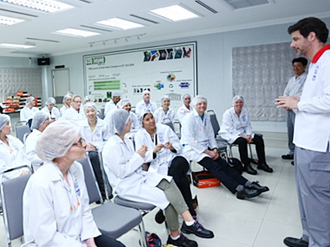
Advanced Food Hygiene Training course is provided for small groups of executive and managerial level teams. 

Course Curriculum

1.  INTRODUCTION

Objective: Understanding the relationships between food hygiene and food-borne illness and the socio-economic cost of food-borne illness and their relationship to food safety, in addition to:

  • The economic costs upon employers and the personal costs to individuals of food- borne illnesses.
  • The benefits to the employer of high standards of food hygiene.
  • Recent trends in reported cases of food-borne illnesses
  • Reasons for seasonal variations in reported cases of food-borne illnesses.
  • Customer aspirations and concern for the safety and wholesomeness their food

2.  BACTERIOLOGY

Objective:  To understand the characteristics and classification of bacteria (including pathogenic and spoilage), in addition to:

  1. Structure, shape and size of bacteria.
  2. Functions of spores and their role in the survival of bacteria.
  3. Toxin formation, and distinguish between exotoxins and endotoxins.
  4. Methods commonly used to identify bacteria.
  5. Phases and significance of the growth curve of bacteria, method of reproduction and generation times under optimum conditions.
  6. Factors influencing bacterial growth: nutrients, hydrogen-ion concentration, water activity, temperature, atmosphere and competition.
  7. Different optimum temperatures for bacterial growth and understanding the terms                            psychrophile, mesophile, thermophile and psychrotroph.
  8. Bacterial sampling and monitoring of food and equipment and their limitations.

3.  FOOD- BORNE ILLNESSES

Objective: Causes and control measures of food-borne illnesses, in addition to:

  1. Food-borne illnesses caused by the ingestion of poisonous foods such as plants, fungi, and fish, and food contaminated by:
    1. pathogenic bacteria or their toxins
    2. chemicals including metals
    3. viruses
    4. mycotoxins
    5. other agents such as protozoa and parasites
  1. The difference between toxic and infective food-borne illnesses.
  2. Sources, types of food commonly involved, incidences, vehicles and routes of transmission,

Average onset times/incubation periods, symptoms, likely carrier status and control measures for:

    1. Salmonella spp
    2. Clostridium perfringens
    3. Staphylococcus aureus
    4. Clostridium botulinum
    5. Bacillus cereus
    6. Vibrio parahaemolyticus
    7. Escherichia coli including VTEC
    8. Bacillary dysentery
    9. Listeriosis
    10. Typhoid and Paratyphoid
    11. Campylobacter enteritis
    12. viruses including Hepatitis A, Norwalk and SRSV
  1. The importance of the current control and prevention of Brucellosis and Tuberculosis in relation to food.
  2. The potential for bacterial contamination throughout the food production chain and methods of contamination control.
  3. Problems presented by carriers, (convalescent and symptom less and methods for their detection and control.
  4. Food-borne illness caused by chemicals (including metals) and examples of food contaminated by chemicals
  5. Symptoms of acute and chronic chemical food- borne illness.
  6. Food- borne illness can be caused by poisonous plants.
  7. Consumption of certain types of fish and shellfish that may lead to illness
  8. The role of management in an alleged outbreak of a food-borne illness.
  9. Possible actions of enforcement authorities in the investigation of an outbreak of a food-borne illness.

4.  PHYSICAL CONTAMINATION OF FOOD

Objective: The potential for physical contamination of food and measures available for its prevention, in addition to:

  1. The most common intrinsic and extrinsic physical contaminants of food.
  2. Procedures for the detection, prevention and removal of physical contaminants.
  3. Physical contamination by non-food personnel such as maintenance staff, contractors, visitors and delivery personnel

5.  FOOD STORAGE, TEMPERATURE CONTROL AND PRESERVATION

Objective: The importance of providing and maintaining suitable conditions for the storage of all types, in addition to:

  1. The importance of satisfactory storage to minimise contamination and bacterial multiplication, deterioration, decomposition and infestation
  2. Stock control systems and the effects of spoilage organisms on food
  3. Variances in shelf life of stored products and the function of date labelling of food
  4. Examining stock for damage or spoilage and the methods for disposing of it
  5. Temperatures necessary to control enzyme and bacterial activity in food.
  6. Explain the requirements for hygienic and efficient use of refrigerated and frozen storage units.
  7. The necessity for rapid chilling of food
  8. Principles for maintaining the safety and quality of food by the use of:
    1. low temperatures
    2. high temperatures
    3. cook- chill, cook- freeze and sous-vide
    4. canning and bottling
    5. dehydration
    6. chemicals such as preservatives, salt and acids
    7. vacuum packaging and modified atmosphere packaging
    8. smoking
    9. irradiation
  1. The importance of time controls in minimising pathogenic organisms.

6.  DESIGN AND CONSTRUCTION OF FOOD PREMISES AND EQUIPMENT

Objective: The importance of satisfactory design, the use of suitable materials in the construction of food premises and equipment, and the need for maintenance and improvement plans, in addition to:

  1. Criteria used in site selection.
  2. Features of satisfactory design of food premises, including product flow.
  3. The importance of adequate facilities for:
    1. Personnel
    2. Cleaning and disinfection
    3. Waste disposal
  4. Maintaining standards of vehicles and outside catering
  5. Features of satisfactory design of food equipment
  6. The importance and use of suitable construction materials for work surfaces, sinks and food equipment
  7. Priority lists for repairs and improvements based on food safety risks

7.  CLEANING AND DISINFECTION

Objective: Principles and procedures for the satisfactory cleaning and disinfection of food premises, in addition to:

  1. Terms such as cleaning, detergent, disinfection, sanitizer and sterilisation.
  2. Need for and benefits of cleaning and the principles of systematic cleaning.
  3. Properties required for cleaning chemicals used in the food industry
  4. Principles of “cleaning in place”
  5. Appropriate cleaning processes for a range of activities, areas, equipment and environments
  6. The need for and essential elements of cleaning schedules.
  7. Management and administrative functions in relation to cleaning.

8.  PEST CONTROL

Objective: Understanding the habitat and characteristics of food pests, the need for control, and effective methods for their control, in addition to:

  1. The habitat, characteristics and reasons for control of rodents and birds, as well as flying, crawling and stored-product insects.
  2. Methods of control (and limitations) for rodents, birds and insects in and around food premises, including environmental, physical and chemical control.
  3. The importance of obtaining professional advice or utilising trained personnel
  4. Methods to monitor the contractor and his effectiveness

9.  PERSONAL HYGIENE

Objective: Understanding the need for high standards of personal hygiene in addition to:

  1. The desirable personal qualities and standards of a food handler and the need for careful staff selection
  2. Staff responsibilities in respect of personal hygiene
  3. Hazards associated with:
    1. skin injuries, infections and the use of inappropriate dressings
    2. wearing jewellery and nail varnish
    3. inadequate or unsatisfactory protective over-clothing
    4. personal habits and bad practices
  4. Controls necessary in respect of persons suffering from, or suspected of, suffering from food- borne illness

 
10. TRAINING STRATEGIES

Objective: The need for and techniques involved in food hygiene training in addition to:

  1. The need for, and benefits of, food hygiene training
  2. Development and content of hygiene training programmes
  3. Principles and methods of effective training
  4. Use, benefit and need for training records
  5. The extent of training necessary for all associated personnel including food handlers, cleaners, serving staff, delivery personnel, contractors, administrative staff, supervisors and managers

 11. MANAGEMENT CONTROL TECHNIQUES

Objective: The importance of, and the techniques involved in managing food safety in addition to:

  • Potential hazards (biological, chemical and physical) that may affect food safety
  • Principles of HACCP, the stages involved in HACCP type studies, and how they can be applied in varying degrees of complexity to any food business
  • The manager’s role in managing food safety
  • Establishing procedures, monitoring them and responding to problems
  • The importance of regular management inspections and internal audits
  • Production and use of hygiene policies, manuals, standards, specifications, etc.


Training   Date
 

26 - 31 May 2012 - Abu Dhabi

1 - 5 July 2012 - Dubai

1 - 5 September 2012 - Abu Dhabi

 
Consultancy    
  HACCP Consultancy
ISO 22000 Consultancy
ISO 9001 (QMS) Consultancy
Food Safety Inspection
Auditing Services
Food Premises Design